
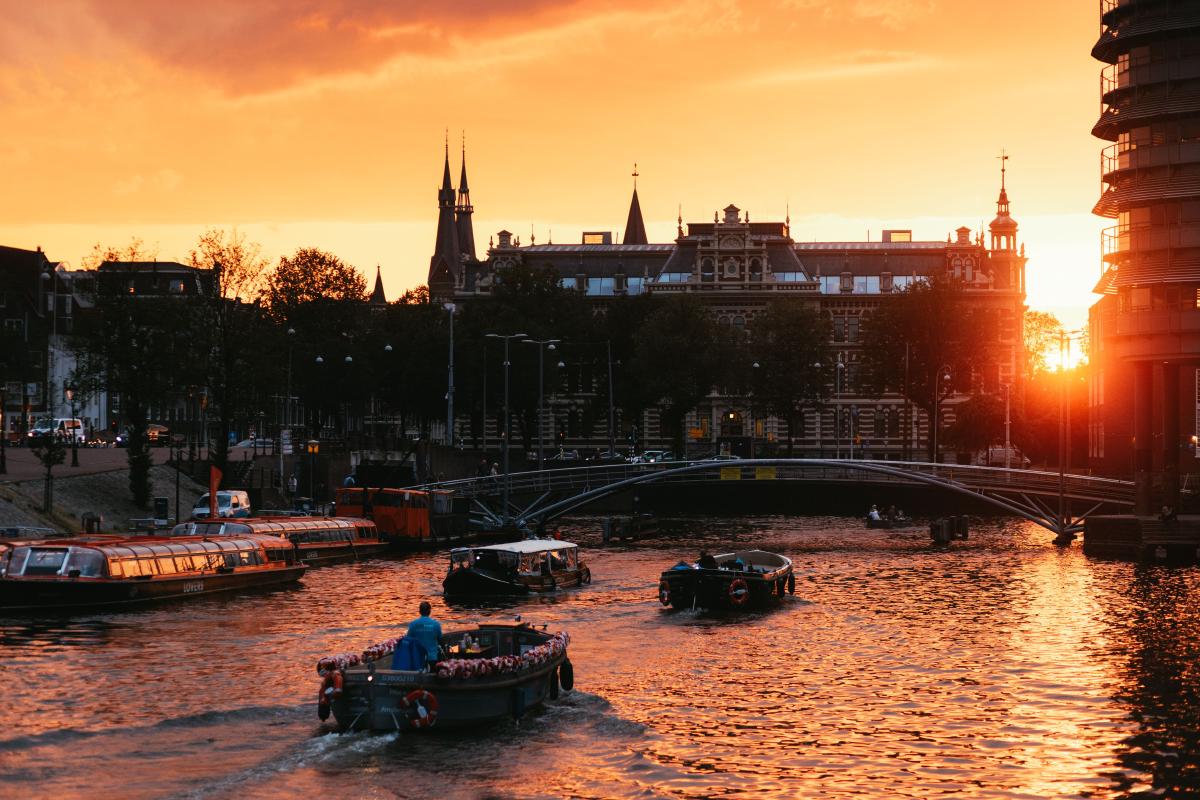
If you’re deciding where to stay in Amsterdam for a first short trip, the western canal belt and southern Jordaan are good places to start, especially if you want to explore on foot. If the prices make you wince, though, keep going: Oud-West and De Pijp give you different places to spend your evenings while keeping the main sights accessible by public transport.
The choice depends on what you want the hotel to make easier. Perhaps you’re hoping to wander out after breakfast and see where the day goes. Or perhaps you’d happily take a tram if it leaves more money for dinner. Both work, but they lead to slightly different shortlists.
Compare the walking and public transport maps#
We made these interactive maps with Theretowhere, a tool for finding areas close to the places you care about. For someone who hasn’t planned much yet, we chose Dam Square, Anne Frank House and the Rijksmuseum: a spread across the historic centre, western canals and museum district.
Stay within a 30-minute walk of the sights#
The first map looks for areas within a 30-minute walk of each destination, giving all three equal importance. Greener areas score better for access to these sights, with the best scores around the central and western canal belt, including the Nine Streets area.
Open the walking map to explore particular blocks.
Widen your search with public transport#
The second map keeps the same destinations and 30-minute limits, but switches to public transport. More of Oud-West, the Museum Quarter and De Pijp comes into reach, alongside parts of Oost and pockets in Noord. That gives you more room to compare hotel prices and choose an area you like.
Open the public transport map. These maps compare sightseeing access; hotel prices and neighbourhood atmosphere are the next part of the decision.
Canal belt and Nine Streets: pay for an easy walking trip#
Around the Nine Streets, small shopping streets cross the canals, with boutiques and cafés giving you reasons to stop between attractions. If strolling beside the water is part of what brought you to Amsterdam, staying here means it starts outside your door.
This area also performs well on the walking map because it sits between our sightseeing destinations. You don’t have to commit the whole day to one end of town, and returning to the hotel before dinner is easier to fit in.
However, the address can be expensive. Earth Trekkers’ accommodation guide identifies the canal ring as one of the city’s pricier areas. Use a room here as your comparison point: if another neighbourhood saves very little, the central location may be worth keeping. If the difference is substantial, the transit map gives you alternatives.
Jordaan: canals, cafés and a neighbourhood to linger in#
The Jordaan suits a trip where wandering is as appealing as checking off sights. Around Bloemgracht and Egelantiersgracht, the canal streets give way to smaller residential lanes; elsewhere, galleries and traditional brown cafés invite a slower afternoon. The official Jordaan guide is a useful introduction to its markets and cultural stops.
For our sightseeing mix, focus first on the southern part. From here, all three sights are within a 30-minute walk, whereas moving farther north puts you closer to the northern canals and farther from Museumplein. Being near Anne Frank House doesn’t automatically make every other stop equally close.
Nor does stepping outside the canal belt guarantee a bargain. Jordaan is also a desirable, expensive area, so compare it for its atmosphere and exact location. A modest room on a street you love may suit you better than paying extra for a canal view you’ll mostly enjoy from outside anyway.
Oud-West: a useful place to look for better value#
Oud-West deserves attention when central hotels stretch the budget. De Hallen and Foodhallen occupy a former tram depot, while Ten Katemarkt gives you another nearby food stop. Staying here leaves you with somewhere to spend an evening even when you’ve finished sightseeing for the day.
Looking at the walking map, though, only the eastern part of Oud-West keeps you within a 30-minute walk of all three sights. If walking matters, inspect the blocks nearer the canal belt; if you’re comfortable taking public transport, you can compare farther west too.
There are budget accommodation options in the wider area, although an attractive boutique hotel can still cost plenty. Treat Oud-West as a place to search for savings, then compare like-for-like rooms. A cheaper listing with a shared bathroom is a different purchase from a private double, even when both appear under the same price filter.
De Pijp: make dinner part of the neighbourhood choice#
De Pijp is a strong candidate if you’d enjoy coming back to an area with plenty of places to eat. Albert Cuypmarkt and the streets around it provide a lively daytime focus, while Sarphatipark offers somewhere greener to pause. You can get a feel for those options in the official De Pijp guide.
Unlike the eastern edge of Oud-West, most of De Pijp is more than a 30-minute walk from at least one of our three sights, but the public transport map brings much more of it into the search. If those evenings appeal, you can travel to the western canals during the day and come back for dinner near your hotel.
Check De Pijp alongside Oud-West for alternatives to a canal-side room, without assuming it’ll always be cheaper. Its popularity and hotel choice mean the actual offer matters more than a blanket “budget neighbourhood” label. Between similarly priced rooms, your preference for market-and-restaurant streets or Oud-West’s food hall and park access can make the decision.
Museum Quarter: keep the art museums close#
If the Rijksmuseum and Van Gogh Museum are already at the top of your list, the Museum Quarter becomes more compelling. Museumplein concentrates major museums, and nearby Vondelpark offers an easy change of pace. The surrounding Oud-Zuid area has leafy streets and a more polished residential feel.
Only the northern edge of Museumkwartier keeps all three sights within a 30-minute walk, although public transport widens the options. That’s partly because the map also asks you to stay close to Anne Frank House and Dam Square. For a museum-heavy visit, you may quite reasonably prefer a hotel farther south.
Compare individual hotels here with De Pijp and eastern Oud-West. An upmarket neighbourhood can contain simpler accommodation, while a lower-priced room elsewhere can lose its appeal if most of your plans are beside Museumplein.
Noord: consider the savings alongside the whole journey#
Across the IJ, Noord offers a different setting, with contemporary architecture and waterside cultural venues. Time Out notes that accommodation here is often better value than in the centre, making it worth checking when the central shortlist feels expensive.
Be specific about the address, though. Our transit map shows separate pockets in Noord rather than one continuous area. The Buiksloterweg ferry is free and runs through the night, but the hotel-to-ferry walk and onward journey still count. A hotel near that crossing and one near NDSM are different choices.
For two nights, a small saving may not justify the extra travel. Over a longer stay, or when you actually want to spend time in Noord, the same hotel could make much more sense.
Compare the total before booking#
Suppose a hotel outside the canal belt costs €50 less per night for the same room setup. Over three nights, that’s €150 saved before any additional transport costs. This is an example, not a current price quote, but it gives you something concrete to weigh against travel time and the area you’d prefer.
Keep an eye on Amsterdam’s tourist tax when you compare those prices. In 2026, it’s 12.5% of the accommodation price before VAT, so it can make a noticeable difference to the bill. Don’t assume the first nightly rate you see includes it: check the booking breakdown and any amount due at the property before deciding that one hotel is cheaper.
Once you have the full totals, compare bathroom arrangements, cancellation terms and breakfast too. Then check the actual journeys at the times you expect to travel; no departure time was specified in these example maps.
Once your plans take shape, make your own Theretowhere map with the sights you want and the travel times you’re happy with. If you’ve already collected an itinerary, you can also paste it into Theretowhere’s itinerary-to-heatmap tool and choose Amsterdam as your destination. It picks out the places you plan to visit and builds a heatmap around them, so even a rough set of travel notes gives you somewhere to start.
Then use the Theretowhere browser extension to overlay your map on sites like Expedia or Airbnb while you compare accommodation. You’ll be able to consider the room price alongside how well its location fits your plans, and you may find that the best neighbourhood for your trip is a little different from the one you started with.